Event 1
Manson Family Murders
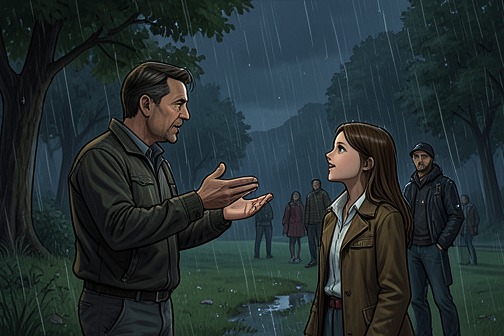
The [Manson Family Murders](entity:event-recall-event-manson-38668d402b2a) are a historical atrocity that enters the story through both brief chronological context and [The Man in the Park](entity:character-recall-character-ddfa24858131)’s account to [Jessica](entity:character-recall-character-6d4711cc086e). The narration places the murders twenty-four years before [September 1993](entity:time-recall-time-september-1993-341997bdce91); the stranger then recasts Charles Manson’s past as a story of music, devotion, and killing, making the event the disturbing center of his attempt to explain a song to a child.
## Historical Context
Jessica is twelve in September 1993, a date the narration anchors against several events in recent history. The Manson Family Murders occurred twenty-four years earlier, placing them in 1969. That compressed reference establishes the murders as a known part of the past before the encounter in the park gives them a more immediate and troubling form.
The narration identifies the perpetrators as the [Manson Family](entity:organization-recall-organization-manson-family-77ea7146c5b8) but does not give a full account of the crimes or name the victims. Its few concrete details come from The Man in the Park: he says the killings took place at [Benedict Canyon](entity:location-recall-location-benedict-canyon-649f35eb9797) and involved a woman, her child, and other people. The event remains a stark outline rather than a dramatized scene.
## The Stranger’s Account
The Man in the Park introduces Charles Manson to Jessica as a singer who might have become a star before he killed people. He describes women following Manson and loving him, then says that the woman, her child, and others were killed. In his telling, Manson and the women are imprisoned, the group has dispersed, and their devotion to one another has not ended.
That account belongs to the stranger, not to an independent explanation of the murders. His emphasis falls on the followers’ attachment and on songs supposedly connected to their story. The account therefore places an unverifiable-sounding romantic narrative beside the bare fact of mass killing; it does not establish the details of the murders beyond the limited information the scene provides.
## Role in the Encounter
The murders explain the song the stranger has brought to Jessica and provide the unsettling context for his insistence that she liked it. Jessica does not recognize Charles Manson and initially asks whether he is a singer. After the stranger’s explanation, she says she does not understand what he is talking about and tells him he should leave. He answers that the song appealed to her and says that is why he brought it.
The contrast between Jessica’s ordinary visit to the park and the stranger’s abrupt account of murder makes the historical reference function as an intrusion into a child’s private space. The event is not narrated in detail; instead, it arrives through the stranger’s explanation, whose mix of music, devotion, imprisonment, and violence leaves Jessica wary and makes the encounter’s focus on the song feel ominous.
Event 2
Jessica's Park Encounter with a Stranger Claiming to Know Charles Manson
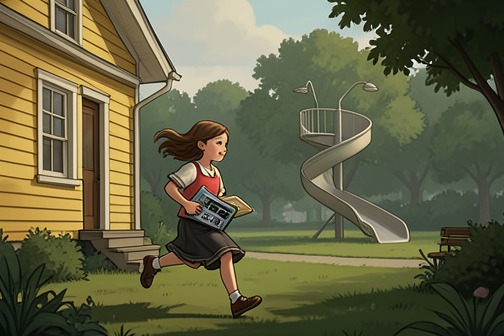
[Jessica](entity:character-recall-character-6d4711cc086e)’s Park Encounter with a Stranger Claiming to Know Charles Manson is a brief, escalating encounter that transforms a twelve-year-old’s familiar skate-park routine into a possible warning about Polly Klaas’s abduction. [The Man in the Park](entity:character-recall-character-ddfa24858131) draws Jessica in through music and a promised cassette, then violates her bodily boundaries and pressures her to meet him at midnight. Jessica stays away, but the cassette and her account become part of the police inquiry; the eventual discovery of Polly’s killer complicates the apparent connection between the stranger and the crime.
## The Park and the First Approach
Jessica’s visits to the park are part of a practiced routine. After field-hockey practice, she runs the three hundred meters from her family’s yellow Victorian house in [Lomita Heights](entity:location-recall-location-lomita-heights-d13b9a5dfc08), carrying a CD player, a black CD case, library books, an apple, and three slices of cheese. At the park, she sits at the bottom of a spiral slide. She has seventeen CDs but listens to only three, and her battered fantasy and science-fiction paperbacks often concern young people discovering special powers. The older skaters nearby are noisy and absorbed in their own activity; they never speak to her. She watches them, listens to music, pretends to read, and goes home.
The first time she notices The Man in the Park, she is opening a new Guns N’ Roses CD. She has just run a fingernail along its cellophane and is about to tear the wrapping with her teeth when she catches him watching from the other side of the playground. At first she takes him for a skater: he is lean and about their height. But when he moves out of the late-afternoon backlight, his long hair, reaching his back, and adult appearance make the difference unmistakable. He looks at her, winks, points his thumb and forefinger like a gun, and pretends to fire. The gesture makes their first contact an uneasy one, although Jessica does not yet know what to make of him.
Three days later, he appears without warning and sits cross-legged on the gravel in front of the slide. He asks what she is listening to. Too surprised to answer, Jessica opens her CD player and shows him the disc. The small exchange establishes music as the route by which he approaches her: he takes an interest in what she likes, and his attention gives an unfamiliar adult a place inside a routine where no one else has addressed her.
## A Gift Becomes Pressure
The Man in the Park promises to bring Jessica a cassette player. She considers avoiding the park the next day, but reasons that it is hers too, that it is busy in daylight, and that the skaters could help if anything happened. She goes, waits until nearly half past five, and he does not appear. A week passes before he returns, apologizing for the delay and holding a battered Walkman. Most of its rubber buttons are missing, and one lower corner is stained with a sticky red substance. Jessica refuses to listen to anything on it because it looks filthy. He asks to borrow her headphones, and the exchange eventually leads to a cassette that Jessica keeps in its plastic case.
When Jessica asks about the music, The Man in the Park says it is Charlie—Charles Manson—and tells her that he was a singer before killing many people at [Benedict Canyon](entity:location-recall-location-benedict-canyon-649f35eb9797). Jessica asks whether he is a singer; the stranger’s answer joins a pop-music object to a history of murder. The cassette is no longer merely a promised way to hear music. It carries the stranger’s disturbing claim and, as Jessica will later learn, may preserve evidence of his contact with her.
As Jessica prepares to leave, she thinks he is going to go, but instead he bends down and takes her face in his large, warm hands. She expects a kiss. He runs his thumb over her mouth, and when she opens her lips, pushes it inside. She feels the rough ridge of his fingerprint against her tongue and tastes the dirt beneath his nail. He makes her promise to return the cassette. The physical contact is not a misunderstanding about an intended kiss: it is an intrusion that leaves Jessica frightened and focused on the filthy thumb in her mouth.
Jessica says she cannot come because she has a friend’s sleepover. The Man in the Park dismisses her friend and insists that they meet after she has listened to the tape, so she can tell him her favorite song. He first suggests ten and then midnight. Jessica objects that she is twelve and will not meet him in the park at midnight, but he treats the appointment as settled. His casualness—the tousle of her hair and a tap under her chin—contrasts with the danger of what he has just done and demanded.
## The Missed Meeting and the Report
Jessica tells herself she will not go to the park at midnight. Still, she cannot stop thinking of him as Charlie, even though she knows that is not his name. She repeatedly checks her mouth in the bathroom for blood and imagines biting off the thumb that entered it. The thought gives her fear a violent, bodily focus: she pictures the stranger pulling away with a bloody stump. Her response makes clear how forcefully the encounter has unsettled her, even as she recognizes that meeting him would be foolish.
When her friends call to ask her to bring Dirty Dancing to the sleepover, Jessica says she has a stomachache. She feels angry at the prospect of watching her friends cuddle stuffed animals and play levitation, then regrets missing the party when she is left at home with her parents and younger brother. The choice does not send her to the park. After the family falls asleep on the couch during a film, Jessica is close to tears at the sight of them and imagines how frightened and angry they would be if they knew what had happened. Instead of waking them, she brings her pillow and blanket to the couch and keeps watch over them and herself until midnight passes. She finishes the vigil silently cursing Charlie.
The following evening, a television report shows a girl Jessica’s age, with the same hair and freckles, who was taken from her room during a sleepover by a knife-wielding man. His face on the wanted poster looks terrifyingly familiar. Jessica’s parents spend nearly an hour getting her account from her through sobs, sorting the relevant details from her distressed talk about Axl Rose and Charles Manson. Once they understand that she is describing a man, the park, and the sleepover, they call the police. The investigation is already being overwhelmed by calls from cranks, jokers, and self-proclaimed psychics as Polly’s abduction becomes a notorious crime in [Sonoma County](entity:location-recall-location-sonoma-county-a7893e0a799c).
Two days later, two policewomen interview Jessica. She cannot give them the stranger’s real name, but she tells them he gave her a cassette and that he handled it with dirty hands before putting it in a plastic case. The cassette is still in her school bag. The officers fetch rubber gloves, tweezers, and an evidence bag from their car, take the tape, and thank her formally. A piece of music passed between an adult and a child in a park has become a physical trace for investigators to examine.
## A Resemblance That Does Not Resolve the Case
The encounter’s consequences extend through months of public attention. More than four thousand people search Sonoma County for Polly, and a black-and-white version of her school photograph is posted across [California](entity:location-recall-location-california-fd5bbc3f2eb4). Jessica becomes convinced that the police will return to accuse her publicly as the girl who first met the kidnapper and invited evil in. Her fear is not only that the stranger may have been dangerous; it is that her own contact with him will make her culpable in the crime.
When Polly is found in a shallow grave behind [Highway 101](entity:location-recall-location-highway-101-5d91558ef09b), the murderer turns out to be an old man. The resemblance between him and the figure Jessica saw on the wanted poster is attributed to imagination, or to the light. The revelation does not erase Jessica’s frightening encounter or the value of her report, but it undoes the apparent visual link on which her fear of having met the killer had rested. The episode holds two kinds of evidence in tension: Jessica’s remembered face, which seemed to match the poster, and the cassette she could actually hand to police. The first proves uncertain; the second gives the encounter a concrete place in the investigation.
Event 3
Polly Klaas Kidnapping and Murder

The [Polly Klaas Kidnapping and Murder](entity:event-recall-event-polly-klaas-00704142ac0e) is both a crime that devastates a [California](entity:location-recall-location-california-fd5bbc3f2eb4) community and the event that turns [Jessica](entity:character-recall-character-6d4711cc086e)’s private encounter with a threatening stranger into a possible clue in a major investigation. Polly was taken from her bedroom during a sleepover by a knife-wielding man. Because a wanted poster seemed to show a face Jessica recognized, she and her family tried to connect the kidnapping to a man she had met at a park. That apparent connection drew the family into the case, then fell apart when Polly was found and the resemblance proved to be an illusion.
## Background and Abduction
The story places the kidnapping in the autumn of 1993. Jessica was twelve that September, and Polly, whom Jessica would soon see described in the news, was the same age. The account marks the case’s place in a crowded historical moment: it occurred three weeks after a man abducted Polly during a sleepover in [Petaluma](entity:location-recall-location-petaluma-d06f3d3806fc), California. For Jessica, the date is not merely background. She had recently encountered a man who spoke approvingly of the Manson murders, and the possibility that this stranger might be connected to Polly’s disappearance made the crime seem perilously close to home.
The next evening, Jessica’s family watched the first television report about the missing girl. The report described someone with Jessica’s age, hair, and freckles, taken from her bedroom by a man carrying a knife. The wanted poster showed a face that struck Jessica as disturbingly familiar. The resemblance gave a private fear a public shape: the man she had met at the park might not have been an isolated menace but the kidnapper now being sought. At this stage, the connection was an impression, not a confirmed identification, but its apparent fit was powerful enough to make Jessica tell her parents what had happened.
## Report and Investigation
Jessica’s parents needed nearly an hour to get the full story from her. Her sobbing account tangled details they considered relevant with her fear about Axl Rose and Charles Manson. Once they understood that she was describing a man, a park, and a sleepover, they called the police. Reaching someone at the station took another two hours. Polly’s disappearance was rapidly becoming the most notorious crime in [Sonoma County](entity:location-recall-location-sonoma-county-a7893e0a799c), and the police were already receiving calls from mentally ill people, pranksters, and self-described psychics. The delay did not mean Jessica’s report was ignored; it unfolded amid a flood of claims competing for attention.
Forty-eight hours after the family’s call, two policewomen interviewed Jessica. Although she did not know the stranger’s real name, she had a cassette he had given her. He had handled it with dirty hands and placed it in a plastic case before handing it over; it was still in her school backpack. The officers went to their car for rubber gloves, tweezers, and an evidence bag, then took the cassette and thanked Jessica formally. For the family, the object made her recollection materially useful: the encounter was no longer only a frightened child’s story but also the source of an item the police could collect as evidence. The officers told her parents they would contact them again soon.
The case widened far beyond Jessica’s statement. In the following months, more than four thousand people searched Sonoma County, calling Polly’s name as they looked. A black-and-white version of her school photograph appeared on walls, trees, and telephone poles across California. For a time, the story seemed to occupy the whole country’s attention. Jessica, meanwhile, expected the police to return and publicly blame her as the girl who had met the kidnapper first and invited evil in. The scale of the search intensified that fear: an encounter she had thought private now appeared, in her imagination, to place her at the beginning of a public tragedy.
## Discovery and Reversal
When Polly was eventually found in a shallow grave behind [Highway 101](entity:location-recall-location-highway-101-5d91558ef09b), the investigation produced a decisive reversal in Jessica’s understanding. The murderer was an old man; his supposed resemblance to Charlie on the wanted poster, the story explains, had been only a trick of imagination or light. The face that had seemed to join Jessica’s encounter to Polly’s fate did not establish that the two events had a real connection. The revelation separates the actual crime from Jessica’s mistaken identification without diminishing what happened to Polly: the abduction ended in murder, while the stranger Jessica had met had not been shown to be the person who killed her.
Nearly a year later, a padded envelope arrived at Jessica’s home from the Petaluma police station. She was sure it contained the cassette, but her parents confiscated the envelope before she could check. She never saw either it or the tape again. The evidence item that had briefly made her encounter part of the investigation thus disappeared from her own view, leaving her without a direct account of what became of it. The case’s practical aftermath for Jessica is defined by that unresolved object as much as by the official correction: she had reported what she knew, the police had taken the tape, and the promised later contact yielded no explanation she could recall receiving.
## Jessica’s Interpretation and the Event’s Afterlife
At fourteen, Jessica recognized that she had been wrong to think Charlie was looking for her and had taken Polly instead. The two events, she understood, had happened together by coincidence. Yet she continued, for the remainder of her childhood, to feel that Polly’s fate and her own encounter were connected by a force running deep beneath the surface. That lingering association did not depend on a proven link between the men or the crimes. It survived precisely as a felt relation after the factual explanation had undone the apparent one.
Later, when she had left for college, Jessica reinterpreted her first response as childish egocentrism: the wish to see herself as the center around which the universe turned. She imagined Polly’s killer as a destructive supernova and Charlie as an insignificant dwarf star. From a child’s position, she reasoned, what was small and near and what was vast and distant could briefly seem equally bright; the apparent equivalence had been a trick of perspective. This later account does not erase the fear or the sustained attention the case commanded in her childhood. Instead, the narrative preserves the difference between the scale of the real crime and the scale it assumed in Jessica’s immediate experience. The kidnapping and murder remain a catastrophe in their own right, while their accidental proximity to Jessica’s encounter explains why she first mistook distance for connection.
Event 4
Friend Forced to Kill His Ex-Girlfriend
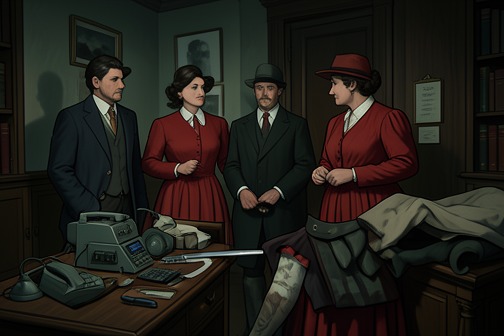
[Friend Forced to Kill His Ex-Girlfriend](entity:event-recall-event-6901eebbe0d1) marks the point at which The Narrator Couple’s possessiveness becomes lethal: anger at their friend’s absence drives them to his home, where they take control of the situation and force him into an act that kills the woman with him. The episode’s crucial reversal is not simply that the couple discover their friend with someone else. It is that their wish to recover an earlier, exclusive dynamic becomes a command over another person’s life, while their friend’s resistance gives way to coerced compliance.
## Causes and Background
The confrontation begins with The Narrator Couple feeling that their friend has disrupted the arrangement they had come to depend on. In their account, the prospect of returning to life as a couple alone feels intolerable: they imagine a diminished intimacy, stripped of the excitement and conflict that had gathered around their connection with him. Their anger is therefore bound up with desire. They are furious that he is unavailable, but also energized by the prospect of going after him and discovering what has happened.
They call him repeatedly and receive no answer. Rather than accept his silence or wait for an explanation, they decide to go to him. The urgency matters: the visit is presented as a deliberate escalation, not an accidental encounter. Their expectation that something irreversible may happen gives the search the quality of a hunt. Before they see him, they are already treating the visit as a confrontation in which they intend to reclaim control.
## Discovery and Escalation
They find their friend in a bedroom with the woman identified in the event as his ex-girlfriend. At first, the ordinary quality of the scene strikes The Narrator Couple as almost absurd after the intensity of their expectations. That response quickly gives way to panic and rage. Their attention fixes on the woman speaking, and they order their friend to make her stop. The demand reveals how rapidly the couple’s jealousy becomes an attempt to silence the person they have cast as an obstacle.
Their friend looks down and trembles. The Narrator Couple register his distress, and the anger that had driven them into the room changes character: instead of withdrawing, they seize on the shift as an opportunity to direct what happens next. Their account makes the transition unsettlingly abrupt. The couple who had arrived to find out what was going on now dictate the terms of an act of violence, treating their friend’s fear as something to overcome rather than a reason to stop.
## Coercion and Outcome
A physical struggle follows between the friend and the woman. It ends with him restraining her, and The Narrator Couple tell him to continue. Their commands turn his actions into something performed under pressure: the couple insist that he finish what he has begun, while making clear that they expect obedience. The event’s central coercion lies in this progression from demand to enforced continuation. The friend does not act freely; the couple use their presence and authority over the encounter to make him comply.
The Narrator Couple remain while the violence continues and then tell him to stop. By that point, the woman is no longer responding, and the event identifies the outcome as her death. The couple’s intervention has not prevented harm; it has shaped and prolonged it. Their friend tries to withdraw from the situation, but they keep him there, offer him comfort, and leave him beside the woman. The gesture of consolation comes after the fatal coercion and cannot undo it. It instead shows the couple extending their control from the act itself to its immediate aftermath.
## Consequences and Significance
The scene binds the couple’s intimacy to their domination of others. Their shared anger and excitement become a joint force: they arrive together, issue commands together, and later console their friend together. That collective perspective does not soften their responsibility. It makes the pressure they exert more visible, because the friend faces not one person’s demand but the unified will of the couple.
The episode also reverses the apparent balance of power. The couple begin by feeling abandoned and unable to restore their preferred relationship with their friend. At the scene’s end, they have compelled him to act and determined when he must stop. Yet this recovered control is morally ruinous: the woman is dead, and their friend is left in distress. Their tenderness toward him sits beside their cruelty toward her, revealing that care in this scene is selective and compatible with violence.
As narrated by The Narrator Couple, the episode offers no mitigating account of the pressure they apply. Their attention to the friend’s fear and subsequent grief makes his suffering legible, while their own decision to exploit that vulnerability remains central. The event’s force comes from that contrast: the couple can recognize distress closely enough to comfort him, but they do not allow that recognition to interrupt the killing. What begins as a search for their friend ends with an irreversible consequence, exposing the destructive endpoint of their demand that he belong within their shared emotional world.
Event 5
Tilly's Birthday Party Turns into a Collective Monster
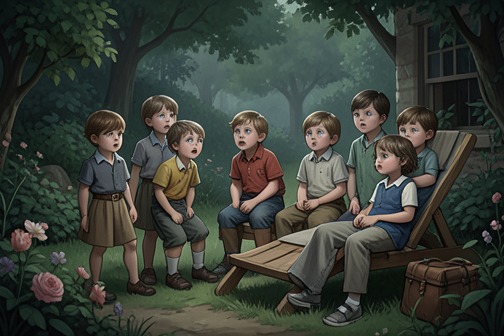
[Tilly's Birthday Party Turns into a Collective Monster](entity:event-recall-event-tilly-02e80d96d33d) transforms a children’s party game into the occasion for a supernatural and unsettling collective change. [Tilly](entity:character-recall-character-816162dc495f) chooses who will hide; a birthday candle grants wishes; and the guests, gathered together as the rules require, become a single terrified creature. The party’s shift from play to crisis also alters the meaning of Tilly’s birthday gift: instead of a harmless joke, it becomes an expression of hatred made powerful and inescapable.
## The Game and Its Rules
The event begins with [Sardine (Game)](entity:concept-recall-concept-sardine-f9550c9e4883), whose ordinary rules already make gathering the point of play. Everyone closes their eyes except the person hiding. After counting to one hundred, the others search; whoever finds the hider joins them in the hiding place, and each subsequent finder joins the growing group. The game ends when all but one are crowded together. Its name and structure make compression part of the fun: people converge voluntarily, one discovery at a time.
At the party, Tilly takes charge of this process. She leads the guests into the garden, climbs onto a lounge chair, and looks down at them. [Marla](entity:character-recall-character-636da41f7bab) sees in her posture the complacent benevolence of a queen. Tilly announces that she will choose the person who hides first, and her finger moves among several guests, including Steve, before settling on one. The choice gives Tilly a small, theatrical authority over the game; its consequences become much larger than the selection initially appears to promise.
## A Birthday Wish Changes the Gathering
The [Birthday Wish Candle](entity:object-recall-object-f37a2985df1a) is not merely a party decoration: it grants wishes. The story reveals that a simple birthday magic can capture hatred and magnify, refract, and direct it, like a beam. The guests’ proximity therefore ceases to be only the playful condition of Sardine. The game has assembled them in a shared hiding place, while the magic turns what is directed at them into a force affecting the group as a whole.
This reversal changes the charge of the gathering. Sardine’s crowding is temporary and chosen, a source of comic closeness governed by clear rules. Now the guests are overwhelmed by an invisible power and lose their separateness. The event’s horror follows from that contrast: the same collective arrangement that made the game work makes the party vulnerable to the candle’s magic. What had seemed like a small birthday ritual becomes the means by which a private or diffuse hostility is enlarged into a shared crisis.
## The Guests Become One Creature
The transformation is described as more than a crowd pressed together. The guests’ bodies and minds become a single confused, panicked organism, with no clear boundary between one person and the next. The change collapses the distinction between individuals and produces a monster that trembles, struggles, and cries out. The scene’s grotesque scale gives physical form to the collective force released by the birthday magic, while its panic marks the loss of any control the guests had when they entered the game.
From the hilltop beneath a bright moon, Marla and Tilly hold each other as the creature convulses below them. The staging sets the two apart from the mass without placing them outside the event’s emotional consequences: mother and daughter are together, watching what the party has become. The birthday celebration itself is recast as Tilly’s gift. Instead of teasing, trickery, or a prank, the gift is a monster in distress. That contrast is central to the scene’s unease: the expected mischief of a children’s gathering has become suffering, and the people the guests would ordinarily care for are no longer being released or protected by the game.
## Marla’s Silence and the Candle’s Enduring Presence
After the transformation, Tilly waits for Marla to respond. Marla tries, but cannot find words; she reflects while the creature below them pleads for mercy. The pause leaves the emotional consequence unresolved. Tilly’s role as chooser and birthday celebrant has led to an outcome that neither the game’s rules nor the language of a present can comfortably explain, and Marla’s silence registers the difficulty of answering her daughter in that moment.
The candle remains visible beneath melted ice cream, torn streamers, and cake crumbs. It spins, gives off sparks, and continues its playful-sounding refrain even as the monster suffers. This juxtaposition keeps the birthday setting present at the scene’s close: familiar party remnants surround the magical object, but no longer make the event feel harmless. The candle’s persistence also leaves the magic active in the reader’s understanding of the ending. The celebration has not simply been interrupted by an unrelated threat; its own wish-granting object has redirected the party’s atmosphere and turned its gathering into the source of the crisis.
Event 6
Aaron's Nighttime Chase and Run with Grace
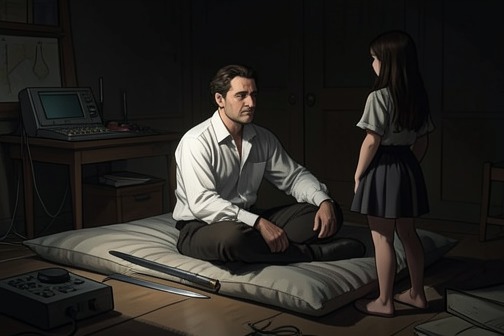
The event marks a turn in [Aaron](entity:character-recall-character-792c3adb48fa)’s last night in the village: fear and humiliation give way to a strange, wordless run with [Grace](entity:character-recall-character-a394cdeec036), just before he is due to leave for home. What begins as a possible threat at his house becomes a pursuit across the settlement and ends among the girls he has come to help, where the scene’s danger is recast as play and recognition.
## Background and Uneasy Departure
At sunset on his final day in the village, Aaron walks into the center for the last time. He buys a chapati and a Coca-Cola, then pauses and buys a second set for Grace. As he imagines how she will react to his departure, her teasing about the [Peace Corps](entity:organization-recall-organization-peace-corps-ae47ab1bfc95)’ failure to prepare him for night runners comes back to him. He privately recognizes how little he has learned about what he needed to know. The exchange gives the coming night an immediate connection to Grace: she is absent, yet her voice and the local stories she has shared shape what Aaron expects and fears.
The night initially brings no Grace and no runner, only oppressive heat inside the house. Aaron, uneasy but unwilling to open the windows, sits on his mattress in his underwear with a long, flat blade from the yard shed across his lap. He has told his supervisor that he does not feel endangered in the village; his private state is more complicated. He feels unsettled, humiliated, and powerless, and is tired of those feelings. The weapon and his vigil show him preparing for danger even as his earlier assurance suggests he does not believe the danger is straightforward.
## The Disturbance at Aaron’s House
Shortly after midnight, knocking begins at the door and windows. It moves from one side of the house to another so quickly that Aaron imagines more than one person is outside, perhaps a group of girls. He recalls one girl’s earlier defiance and recognizes the contrast between her lack of fear and his own crouched position indoors. He has come to the village to help, but now sees himself as a coward. When the knocking spreads around the house, he shoulders the blade and approaches the door.
Aaron opens it abruptly. A pair of bare legs swings into view, and one kicks toward him; he reacts by swinging the blade. The figure escapes upward, leaving the blade lodged in the old doorframe. Aaron is shaken by the possibility that he might have struck someone. The encounter turns his fear into horror at his own near action: the threat is no longer only what may be outside, but what he himself might have done in panic.
The runner appears to move onto the roof, where the knocking becomes a light tapping. Aaron goes into the yard and catches sight of a small shadow crossing the sloping roof. He calls to the girls by name, asking them to come and talk, but receives no answer. A sound from the far side of the house draws him around; then a mocking meow comes from behind him. The unseen figure has made him turn repeatedly, unable to establish where it is or how it moves. His attempt to speak gives way to anger, and when he lunges to catch the runner, it slips past him and out through the gate.
## The Chase Through the Settlement
Aaron runs after the figure into the dark street, barefoot and still in his underwear. He forgets his exposed state and follows the moving shadow, which seems to change in size—from childlike to man-sized, then cat-sized and back to the proportions of a girl. The chase crosses empty streets past closed houses and shops, then continues through wet shrubs and a stand of taller trees. Aaron’s route carries him beyond the church and the dump, across a field of maize, and over a wall into a compound lit by flames.
The landscape makes the pursuit feel both physical and disorienting. Aaron is no longer watching safely from inside his house: he has been drawn out beyond its boundary, across places he knows, following a figure whose shape will not stay fixed. His anger propels him, but the chase also strips away the distinction he had made between a protected volunteer and a threatening stranger. By the time he reaches the compound, the people there see him before he understands where he has arrived.
## Recognition and the Run with Grace
The fire belongs to a celebration marking the end of the semester. Aaron recognizes the compound and the school building behind the crowd. [The Girls of First Middle School](entity:character-recall-character-5841dc7cc406) are gathered around the fire with girls from other grades; many hold cans of Coca-Cola or Fanta and have eaten roasted goat. For a moment Aaron cannot distinguish people from shadows, and a shape that seems to be a tall, thin man resolves into a flagpole. The familiar gathering brings the night’s strange pursuit into an ordinary communal setting.
The girls stare at Aaron, and one points at him in fear. He turns, briefly believing in the creatures from Grace’s stories, then sees only the bare wall behind him and understands that he is the pursuer, not the pursued. Some of the younger girls cry; Roda Kudondo calls him a night runner, and the frightened reaction shifts into teasing. Aaron sees himself through their eyes as a frightening outsider, disheveled and covered in dirt and leaves. Their jeers, rather than isolating him, form a protective ring around him; he thinks of the girls as brave.
Then Grace calls softly from a corner of the compound. She is the person who has never feared Aaron, who has laughed at him, teased him, and told him stories. Instead of crying or scolding him, she runs. On the night before his long journey home, she crosses the courtyard naked, visible to Aaron alone. He follows her, agile as a cat. The ending does not explain the runner’s changing shape or Grace’s invisibility to the others. Instead, it changes the emotional charge of the chase: what began in suspicion, fear, and the risk of violence concludes in a shared act of motion, with Aaron no longer alone in the dark.
Event 7
The Queen Kills the King
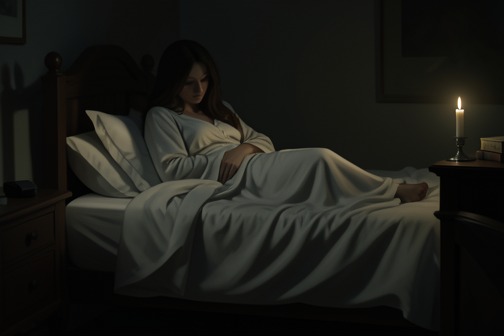
[The Queen Kills the King](entity:event-recall-event-509b6be4a313) is the fatal turning point in the Queen’s long confinement: the King returns to her after years of avoiding her, but their attempted reunion ends with his death and her seizure of power. The encounter begins as an act of grief and possible reconciliation, then turns on the removal of the objects that have accompanied the Queen’s derangement. Its aftermath extends the private tragedy into a public falsehood that no one dares challenge.
## Return to the Queen’s Room
Years have passed since the King last visited the Queen. The narration measures the interval in widening steps—one year, then five, then ten—before describing him as unable to bear the weight of his sorrow any longer. He returns intending to speak with her one final time before taking his own life. The decision brings him back to the room he has kept away from, but it does not mean he understands what has happened there or can reverse it.
The chamber is nearly dark, lit by a single candle. At first the King takes it for empty; only as his eyes adjust does he make out a pale, moving shape on the bed. A sound from the bed makes him nearly flee, until moonlight reveals the figure. The Queen is now profoundly changed in appearance and demeanor: her hair is disordered, her face pale, and her eyes seem accustomed to darkness. She bares her teeth without speaking, then descends from the bed and crawls toward him, dragging the [Mirror, Iron Bucket, and Old Femur](entity:object-recall-object-2307ca521e45) behind her. The familiar objects make her condition visible as part of the room’s present reality rather than a rumor outside it.
## The Attempted Reconciliation and the Killing
The King turns toward the door, but a remembered image of the Queen as a smiling young woman interrupts his flight. The memory changes his response: pity overcomes his fear, and he goes back to kneel beside her. He apologizes. The Iron Bucket echoes his words in the otherwise quiet room, joining this appeal to the objects that have followed the Queen through her isolation.
He then tries, slowly, to draw the Old Femur from her clenched hands. She grips it as tightly as she can, but eventually releases it. The sequence shifts attention from the King’s attempt to comfort her to his attempt to take something away from her. The femur falls; the dented bucket strikes the stone; and the Mirror breaks into pieces. These are distinct consequences of the struggle, and the breakage immediately precedes the brief change in the Queen’s expression.
For a moment she appears confused and seems to return to herself. That apparent recovery does not last. She collapses, and when the King tries to lift her by the arm, she turns suddenly and kills him with a piece of the broken Mirror. The reversal is decisive: the man who came prepared to die by his own hand is killed instead, while the Queen survives the encounter. The narration gives no lasting explanation for her brief lucidity, so it remains a fleeting interruption rather than evidence that she has recovered.
## The Queen’s Account and Accession
The following morning, the Queen leaves her room. Although she remains visibly changed, she speaks clearly and gently to the people. She tells them that the King, overcome by years of grief and having lost his reason, entered her room the previous night and cut his own throat. She says she had been ill for a long time but is now better and ready to govern in her husband’s place. Her story contradicts what has just occurred: the King did not kill himself, and the Queen killed him.
The account is not persuasive, and the narration notes that madness still shines in her eyes as she tells it. Nevertheless, she is the Queen, and no one—including her children—dares to speak against her. Her authority determines which version of the death can be heard publicly. The change from private violence to accepted official story is therefore not a discovery of the truth but a consolidation of power: the Queen names the King’s death as suicide, declares herself ready to rule, and ascends the throne.
## Rule and the Objects’ Afterlife
Soon after her accession, a figure in an old black cloak appears at the Queen’s side. No one is allowed close enough to see it clearly, but people notice its unpleasant smell and, when the Queen bends to listen to its opinions, some glimpse her own face broken into fragments beneath the cloak. The image recalls the Mirror shattered during the King’s death. The text connects the figure to the Queen’s altered life without explaining its nature, keeping the broken reflection as a sign of what persists after the room’s brief moment of apparent recovery.
The Queen lives out the rest of her days beside the cloaked figure and is buried according to her wishes, with it at her side. The King’s death thus leads not to public correction or reconciliation, but to a reign founded on a false account and accompanied by the same unsettling presence. The story then moves beyond both rulers: their children grow old and die, the kingdom collapses and is invaded, and the Queen’s tragedy is forgotten. The Mirror, Iron Bucket, and Old Femur outlast the political story in altered states. The broken Mirror eventually reflects a skull, while the dented bucket falls silent underground. Their final image replaces royal memory with the decay of the objects that marked the Queen’s confinement and the King’s last visit.
Event 8
Margot and Robert's Date and Sexual Encounter
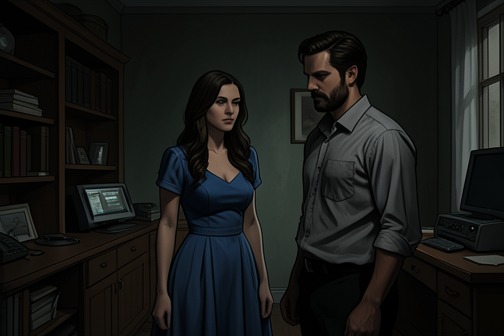
[Margot](entity:character-recall-character-ae1949f45d37) and [Robert](entity:character-recall-character-d1e93b9cec50)’s date and sexual encounter turns the promise of courtship into a study of how expectation, embarrassment, desire, and social pressure can pull apart. Margot is drawn toward Robert partly through an imagined version of him; when they meet, she experiences real attraction alongside discomfort and, during sex, a growing conviction that she does not want to continue. The encounter matters less as a beginning than as a revelation of the distance between outward participation and inward willingness.
## An Uneasy Date
After a break spent exchanging messages, Margot returns to campus eager to see Robert again. He is difficult to reach and explains that work has kept him busy, leaving Margot to feel that their dynamic has shifted against her. When he finally asks her to the cinema, she accepts immediately. She suggests the multiplex outside town rather than the cinema where she works, and Robert collects her in a muddy white Civic with candy wrappers overflowing from the cupholders.
The drive unsettles her. Robert is quieter than she expected and barely looks at her; within minutes, Margot imagines that he might take her somewhere, rape her, and kill her, since she knows so little about him. He remarks that he will not kill her, and she answers with a joke. At the cinema, his attempt at humor about [Red Vines](entity:object-recall-object-red-vines-b177d1e9e440) falls flat. He does not hold her hand during the film, and she interprets his distance as a sign that he has lost interest. His earlier teasing about her casual clothes now seems possibly more pointed than she had thought.
Robert’s choice of film also becomes a source of doubt. It is a bleak drama about the Holocaust, an awkward proposition for a first date; Margot had initially treated it as a joke, but she later wonders whether her response embarrassed him. She reconsiders the evening through the possibility that his silences reflect hurt or insecurity, and this imagined vulnerability makes her feel newly tender toward him. The date’s emotional balance shifts not because Robert explains himself, but because Margot begins interpreting his awkwardness as something she might soothe.
## The Bar and a Turn Toward Intimacy
When Robert asks whether she wants a drink, Margot senses that he expects her to refuse. She agrees, partly disappointed that the evening has gone so poorly after the hopes she built during the break. He takes her instead to an unfamiliar bar that looks like a clandestine operation, with no sign outside and a queue at the door. The bouncer barely examines Margot’s identification before dismissing it as false and sending her aside. Robert has already gone in without noticing. Someone in the queue taps his shoulder and points him back toward her, left alone on the sidewalk.
Margot apologizes, then begins to cry, bewildered that the evening has become so difficult. Robert’s manner softens when he sees her face crumple: he embraces her, comforts her, and kisses her on the head. Margot feels again the impression she had once had outside a 7-Eleven—that she is delicate and precious to him. She laughs through her tears, and Robert kisses her on the mouth. The kiss is clumsy and forceful, but instead of ending her interest, it makes her feel unexpectedly tender toward him. He takes her by the hand to another bar, where there are pool tables, pinball machines, sawdust on the floor, and no one checking identification.
Over drinks, Margot increasingly thinks about Robert’s sensitivity and how easily she might hurt or reassure him. She asks about the films he likes and downplays her own opinions about the art-house cinema where she works, including her unease around her older colleagues. She sees these disclosures affect him, and the sense that she can coax him into warmth gives her both closeness and a feeling of influence. By her third beer, she imagines sex with him as awkward and excessive, like the kiss, but finds that imagining his eagerness and desire produces a sharp physical stir. When she takes his hand and leads him out, his obedient response intensifies that attraction. Outside, however, Robert gives her only a chaste kiss and accuses her of being drunk.
## Sex and the Failure of Enthusiasm
At Robert’s home, the sitting room offers Margot reassurance: its bookshelves, records, board games, and framed posters suggest interests she recognizes. That comfort briefly coexists with a fearful fantasy that the room might be a trap concealing bodies, kidnapped girls, or chains elsewhere in the house. Robert is already kissing and groping her, then leads her into a bedroom furnished with a mattress rather than a bed. He takes a drink of whisky and puts on music with his laptop.
As Robert undresses awkwardly, Margot sees his heavy, hairy stomach and thinks that she does not want this. She does not believe he will force her; instead, she cannot bear the social difficulty of stopping after everything she has done to get there. She fears seeming spoiled or capricious, like someone who orders a meal and sends it back. She drinks whisky and tries to overcome her resistance. Robert’s clumsy, avid touching makes her struggle to breathe, and she wonders whether she can go through with it. Changing position helps; she closes her eyes and recalls the tenderness of his kiss on her head. She takes off her shirt and follows his instruction to remove her bra when he cannot undo it. Her attention settles on how intensely he looks at her, and on the imagined version of his desire that excites her even as the physical encounter remains uncomfortable.
During their sexual touching, Robert’s hand becomes too insistent; Margot flinches, and he withdraws it and apologizes. He asks whether she has done this before. When she tries to explain her nervousness, he says they can take it slowly, but he is soon pressing down on her again. By then, Margot has given up the hope of enjoying the encounter and decides to let him finish. His body and the roughness of his movements provoke repulsion, self-disgust, and humiliation; she experiences herself less as a participant than as an object in a scene he appears to be staging for himself. He loses his erection repeatedly, each time responding aggressively, before finally climaxing and collapsing on her. Margot thinks it is the worst decision she has ever made, while also wondering at the strangeness of her own choice.
## Aftermath and the Imagined Robert
Near three in the morning, Margot says she should go home. Robert seems to have expected her to stay and offers to make excellent scrambled eggs. She declines, citing her roommate’s likely concern. Before she leaves, he catches her arm and pulls her into one last kiss. Once she is back in her room, he sends a message made up of hearts, heart-eyed faces, and a dolphin. The next day, after sleeping for twelve hours, eating waffles in the dining hall, and watching crime shows on Netflix, Margot hopes he might simply disappear without requiring her to end things directly.
Robert’s next message is an innocuous joke about Red Vines. Margot deletes it immediately, troubled by a visceral revulsion that seems disproportionate to what she believes he actually did. She tries to draft a polite breakup message, adding explanations and apologies until it becomes too long and difficult to send. Meanwhile, Robert continues texting, and she imagines him composing each message on the bare mattress in his room. She also recalls that he spoke at length about his cats, though she saw none at his house, and wonders whether he invented them. Her occasional wistfulness the next day is not, she realizes, a longing for the man she encountered that night, but for the Robert she had imagined during their exchanges over the break.
## Significance in the Book
The episode refuses a simple opposition between attraction and refusal. Margot initiates some steps, feels desire, and chooses to continue, but her account also makes clear that these facts do not erase her reluctance: she proceeds because stopping seems socially unbearable, and later describes having abandoned the hope of pleasure. The gap between what she does and what she wants is the event’s central tension, not a puzzle resolved by labeling the encounter wholly as romance or wholly as coercion.
That tension resonates with other scenes in the book without making them identical. In a later encounter, Jacqueline explicitly asks [Ryan](entity:character-recall-character-ryan-9c6f1f1eaa2e) to punch her and kick her in the stomach before sex; when he does, she vomits, and he continues despite his own alarm. Elsewhere, a collective narrator urges a man to silence a woman and carry on, while he pleads for them to stop. These distinct episodes place bodily harm, expressed requests, reluctance, and pressure in different configurations. Against that broader pattern, Margot’s date shows how the performance of a willing romantic or sexual participant can persist even as discomfort takes over—and how the imagined relationship may outlast the encounter itself.
Event 9
Robert's Harassing Texts to Margot
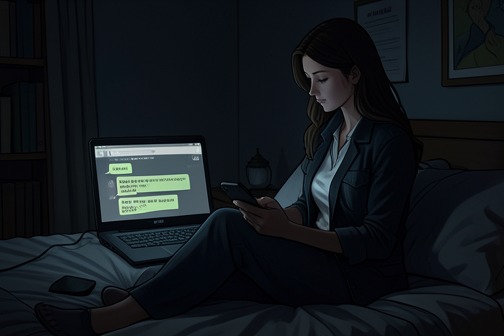
[Robert's Harassing Texts to Margot](entity:event-recall-event-robert-margot-be7520281ed6) turn a hesitant attempt to end a brief sexual encounter into an escalating sequence of unwanted contact. The messages expose the gap between [Robert](entity:character-recall-character-d1e93b9cec50)'s initially apologetic manner and his later entitlement: [Margot](entity:character-recall-character-ae1949f45d37) struggles to say no, then watches his attention shift from apparent concern to accusations and abuse.
## Background and Margot's hesitation
Three days after she and Robert had sex, Margot still had not sent the message she had been composing to end things. She had tried to word it so carefully that Robert could not seize on any phrase as an invitation to continue, imagining that he might offer a casual relationship if she said she did not want one. Each qualification made the draft longer and harder to send. Meanwhile, his texts kept arriving, each more serious in tone than the last, though none addressed anything Margot considered important. She pictured him lying on his bare mattress and composing them one at a time. His earlier stories about owning cats also came back to her; she had seen none at his apartment and wondered whether he had invented them.
The difficulty was not simply that Margot missed Robert. The day after their encounter, she sometimes felt wistful and thought something was absent, then realized that what she missed was the Robert she had imagined behind his holiday messages, not the man she had met. Even when Robert finally gave her an opening by noting that she seemed busy, she answered with an apology and a promise to write soon instead of sending the unfinished rejection. She immediately wondered why she had done so, without understanding her own response.
## Tamara intervenes
After Margot spent an hour on her bed agonizing over what to say, her roommate Tamara urged her simply to tell Robert she was not interested. Margot objected that she had to say more because they had had sex. She defended him as a good guy, though she was unsure how much she believed that description. Tamara then took the phone from her and sent a blunt message telling Robert that Margot was not interested and that he should stop texting her.
Margot's reaction made clear how frightening the boundary felt to her even when it expressed what she wanted. She struggled to breathe and feared that Robert would read the message and shatter emotionally. Tamara insisted that the message was true, but neither woman could dismiss Margot's fear. They went to a bar and shared a pint, leaving the phone between them on the table. When it signaled an incoming text, they both cried out and grabbed each other's arms. Margot could not bear to read the reply herself and pushed the phone toward Tamara, blaming her for sending the rejection.
## From apology to renewed contact
Robert's first response was restrained. He apologized in case he had upset Margot, said he had enjoyed their evening and thought she was attractive, and left open the possibility that she might change her mind. Rather than feeling uncomplicated relief, Margot collapsed over the table with her head in her hands. The release felt like a leech finally detaching, leaving a painful bruise. She questioned whether she was being unfair: Robert, she thought, had done nothing wrong beyond being attracted to her and being bad in bed, and perhaps he did have cats elsewhere in the apartment.
A month later, Margot saw him alone at the bar where they had gone on their date. He sat quietly at a table in the back, hunched over his beer, neither reading nor looking at his phone. Margot grabbed Albert, the friend beside her, and whispered that Robert was the man from the movie theater. Albert had heard a version of the story, though not the true one. He stepped between Margot and Robert to block Robert's view, and they hurried back to their friends. When Margot announced that Robert was there, the group gathered around her and escorted her out together. The disproportionate-seeming protection made her wonder if she was acting like a jerk, even as she felt tired and afraid.
## Escalation and significance
That night, Margot curled up on her bed with Tamara, the light of the phone illuminating their faces as they read each new message. Robert said he had seen Margot at the bar and that she looked pretty, while acknowledging that she had told him not to write. He said he missed her, asked what he had done wrong, and returned to the idea that they had felt a connection. His questions then became guesses about whether he had been too old for her or whether she liked someone else. He asked if Albert was her boyfriend, followed the question with punctuation, and then suggested Albert might simply be someone she slept with. After apologizing, Robert speculated that Margot had laughed when he asked whether she was a virgin because she had slept with many men. He asked whether she was with Albert at that moment, pressed her for a yes-or-no answer, and finally called her a slut.
The sequence makes the apparent courtesy of Robert's first reply unstable: his apology and invitation to contact him later do not end the exchange, and his later messages disregard the explicit request that he stop. Margot's uncertainty and fear remain visible throughout, from the unsent breakup draft to the friends escorting her from the bar. The episode's change in tone is carried by the messages themselves: what begins as a bid for explanation and reassurance becomes sexual judgment and insult, with Robert's demand for a reply replacing any acceptance of Margot's decision.
Event 10
Angela Attacks Ted with a Glass
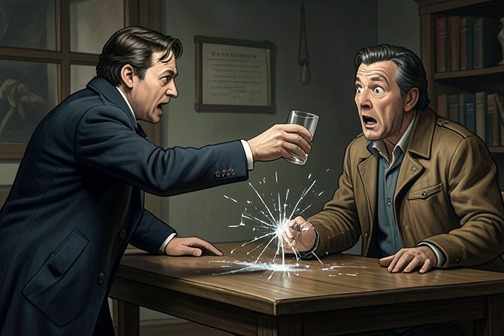
Angela’s attack on [Ted](entity:character-recall-character-ted-a4e78bcc093f) with a glass turns a breakup meeting into a reckoning with the gap between Ted’s account of himself and the consequences of his behavior. The scene begins with his claim to have been honest and ends with him reconsidering whether the women who have been hurt by him could all be mistaken.
## Background and Meeting
By his mid-thirties, Ted’s usual way of ending relationships had stopped bringing the clean break he expected. Earlier relationships had lasted only a few months, and he believed that making clear he wanted nothing serious meant the women he dated could not fairly accuse him of misleading them. More recently, after what he regarded as a final conversation, women would contact him again to say they missed him and wanted to talk.
Angela had been out of Ted’s life for more than two months when he agreed to meet her one November evening, two weeks before his thirty-sixth birthday. She had continued to call and message, and Ted accepted the meeting in the hope that one last conversation would give him some peace. At first, Angela spoke brightly about her holiday plans, work troubles, and friends. Ted understood her cheerfulness as an effort to show him what he was missing. About twenty minutes into the evening, she began to cry.
## The Confrontation and Attack
When Angela paused to catch her breath, Ted told her he believed he was not responsible for what had happened between them. He presented himself as having been clear from the beginning that he wanted a flexible, non-serious relationship, and accused Angela of claiming to want the same while trying to turn it into something more committed. He acknowledged that she was hurt, but cast that hurt as something she had brought upon herself, with him merely serving as the instrument.
Angela responded angrily, pushed back her chair, and threw the entire glass of ice water at Ted before leaving. The glass struck his forehead and cracked; the water soaked his trousers. The abrupt physical response punctured Ted’s attempt to make the breakup a matter of her mistaken expectations alone. As he took in what had happened, he began to question whether every woman who had accused him of causing harm could really have been wrong.
## Immediate Aftermath and Retrospective Meaning
The cracked glass and the sudden interruption of the conversation left Ted facing more than the immediate consequences of the encounter. As people came over, he struggled to make sense of what they were saying and recalled his claim that he had merely been an instrument of Angela’s pain. He wondered whether that claim connected to an increasingly aggressive fantasy he had been having, but could not settle the question in the confusion. The scene’s sharp turn—from Ted assigning responsibility to Angela to Ted questioning his own account—makes the attack a moment of self-recognition, not simply the end of an argument.
That recognition had been building against Ted’s long-standing belief that women who rejected or blamed him had misunderstood him. His relationship with [Rachel Derwin-Finkel](entity:character-recall-character-rachel-derwin-finke-c0df6d1c73b1) shows how that self-image could coexist with conduct that prolonged another person’s hurt. Ted privately knew he did not want to continue seeing Rachel, but when she showed anger at signs of his hesitation, guilt and fear made him retreat from ending the relationship. Instead, he went along with her plans and waited for her to lose interest, while keeping his distance enough to resist a deeper commitment.
Ted also imagined an internal tribunal in which [Anna Travis](entity:character-recall-character-anna-travis-c175492e0880), his first girlfriend, would judge whether he was fundamentally a decent person. Hoping for a verdict that would clear him, he remained with Rachel and continued to mislead her, telling himself that his behavior was less malicious than that of someone who manipulated women for its own sake. Against this background, Angela’s attack disrupts the defense Ted has constructed: he can no longer comfortably treat each woman’s hurt as an isolated misunderstanding, even though the scene does not resolve what he will do with that realization.
## The Shift into Ted’s Past
The scene also opens a retrospective account of how far Ted’s self-image has traveled. Immediately after the encounter, the narrative turns to his childhood: he had been a slight, studious boy whom teachers called sweet, and his early crushes were on older, seemingly unattainable women, stirred by small gestures of attention. One recurring daydream cast him as his cousin’s husband, preparing breakfast in an apron. Set against the adult Ted’s increasingly aggressive fantasy, that domestic image makes the attack a hinge in the narrative: his crisis prompts a search backward through the desires and habits that preceded it, without making the scene itself a settled explanation of how he changed.
Event 11
Ted and Rachel's First Date and First Kiss

[Ted](entity:character-recall-character-ted-a4e78bcc093f) and [Rachel Derwin-Finkel](entity:character-recall-character-rachel-derwin-finke-c0df6d1c73b1)’s first date and first kiss mark Ted’s awkward entry into romantic experience—and expose the gap between his private intentions and the relationship Rachel believes they are beginning. At seventeen, he asks her out without being attracted to her, partly because he has never held a girl’s hand and partly because he hopes dating her might improve his chances with [Anna Travis](entity:character-recall-character-anna-travis-c175492e0880). The evening he imagines as a brief experiment instead ends with Rachel kissing him, teaching him how to kiss, and becoming his girlfriend for the next four months.
## Background and Unequal Expectations
Ted asks Rachel out after tutoring, stumbling through the invitation and regretting it as soon as he has spoken. Rachel responds by taking charge: she gets his phone number, gives him hers, specifies when he should call, and, when he does, lays out the film, its screening time, and where they will eat beforehand. She even explains how to reach her house so he can pick her up. The date is organized around her clear interest and initiative, while Ted’s invitation has been shaped by motives he does not share with her.
His interest in Anna is central to that imbalance. Ted reasons that dating Rachel might help his prospects with Anna, imagining that Anna could recognize her feelings if she saw him fall for someone else. He also entertains the possibility that his own feelings for Rachel might develop, though he is not attracted to her. At seventeen, with no experience holding hands, he treats dating as both an opportunity to learn and a tactic in a different, unspoken pursuit. Rachel, by contrast, behaves as if a first date can naturally lead to more: after the cinema, she talks rapidly about another outing, a new Thai restaurant on Seventh, a romantic comedy they should see, and a Halloween costume group she and her friends are forming. She welcomes him into plans that Ted has not decided he wants to share.
## The Date and Ted’s Attempt to End It
Ted experiences the evening as something Rachel has arranged and inhabited without him. He cannot quite identify who he has been on the date with; it does not feel like himself. In his private assessment, Rachel could have taken an inflatable doll to the cinema and enjoyed herself just as much. The image conveys more than awkwardness: Ted feels that he has contributed nothing, even as Rachel’s talk of future plans assumes their participation together.
On the drive to her house, he decides to clarify that there will be no second date. He expects Rachel to hate him and considers withdrawing from the tutoring program, but thinks that avoiding future encounters might be worth the embarrassment. Yet he has not worked out how to end things directly. He wonders whether one date obliges him to explicitly break off contact, or whether he can stop tutoring her and let her understand the hint. When they arrive, he parks without turning off the engine, a small practical detail that sits uneasily beside Rachel’s expectation of a goodnight. She unbuckles her seat belt and says goodnight but does not get out. Ted answers and leans across to hug her, patting her back delicately in the hope that the gesture will communicate an apology and a plea not to resent him.
## The First Kiss
Instead of accepting the hug as an ending, Rachel puts her hands on Ted’s cheeks, holds his face still, and kisses him on the mouth. For Ted, the shock of his first kiss momentarily drives every other thought away. He freezes, his jaw slack, while Rachel moves her tongue around his mouth. When his mind catches up with his body and reminds him that he is supposed to kiss back, Rachel has already pulled away. She covers his lips with smaller kisses and shows him how to continue, apparently recognizing that he does not know where to begin.
The instruction humiliates him. Ted has just planned to reject Rachel, yet now feels exposed as inexperienced while she takes the lead in both the kiss and its interpretation. After a few minutes, though, he finds that kissing is not difficult. It is not the thrilling experience he had expected: Rachel’s glasses keep knocking against his nose, and seeing her so close makes her seem almost like an indistinct painting. He tries closing his eyes but feels uneasy, as if someone might come up behind him. His attention fixes on the physical awkwardness—the closeness, the glasses, and the popcorn smell on her breath, which he cannot determine might be his own. He wonders whether he would have enjoyed the kiss more with Anna, but cannot even imagine becoming aroused by kissing. Rachel seems much more absorbed, sighing and moving against him, while Ted remains caught between curiosity, discomfort, and shame at his own inexperience.
## Aftermath and Retrospective Meaning
The date does not end with Ted’s intended refusal. He and Rachel see each other for the following four months. That outcome makes the evening a reversal: Ted arrives with an ulterior hope involving Anna and a plan to avoid a second date, while Rachel’s initiative turns the night into the beginning of a sustained relationship. His first kiss is not a triumphant romantic revelation. It is startling, awkward, and only partly pleasurable, and its importance lies as much in how little Ted understands his own participation as in the milestone itself.
Looking back, Ted identifies Rachel as the first woman who could plausibly accuse him of treating her badly. He distinguishes his conduct toward her from his earlier behavior toward Anna: with Anna, he believes he acted cowardly by concealing his feelings, but also tried to be kind. His recollection of Rachel carries a sharper sense of culpability. That later judgment gives the first date an uneasy retrospect: Ted’s failure to share his actual intentions is present from the start, even though the scene’s immediate drama is his first kiss and his embarrassment at being taught. The four months that follow make the date more than an isolated adolescent mishap, but the account does not turn the kiss itself into a simple promise of romance.
Event 12
Anna Confides in Ted about Her College Troubles

[Anna Travis](entity:character-recall-character-anna-travis-c175492e0880)’s confession to [Ted](entity:character-recall-character-ted-a4e78bcc093f) is the moment a phone call prompted by anxious curiosity becomes a private bond. Ted wants to learn whether Rachel’s account of Anna’s troubles is true; Anna, believing that someone from home has finally noticed her distress, discloses how badly her college life and sense of self have unraveled. The scene brings their unequal expectations into focus: she seeks a listener, while he hears an opening for the devotion he has never confessed.
## Background and Impetus
A few evenings after Rachel has told Ted something about Anna, he sits at his computer trying to write her an email. He drafts roughly twenty versions of the same question about whether everything is all right, then deletes them. He has already sent two messages without receiving a reply, and knows he should wait. But he wants to find out whether Rachel’s story is true; the desire to know has become a physical itch beneath his skin.
The call is a departure from Ted’s previous contact with Anna. He knows her university number by heart, though he has called it only once, to sing her the whole of “Happy Birthday” in a voicemail. Anna never called back, but he later received an email thanking him, signed with a cluster of Xs and Os that had seemed significant to him at the time. That small, ambiguous token has stayed with him; the new call begins not from an established habit of conversation but from his uncertainty about what their past contact means.
Ted also approaches the conversation with important information withheld. He does not tell Anna that he has a girlfriend, Rachel, or that he has a crush on Anna; he has, however, been unable to keep from discussing that crush with Rachel. When Anna answers on the first ring, he initially speaks as though he were addressing an answering machine. Her immediate, familiar response breaks through his rehearsed hesitation, but it does not make his approach straightforward: he has called under the pressure of a story he has heard in confidence, and he has not explained how he came to suspect that something is wrong.
## The Call and Anna’s Disclosure
Ted tells Anna that he cannot identify exactly what is wrong, only that he has a feeling something is. He has used information acquired secretly to create the impression of a mysterious psychic connection. The narration marks this as a new degree of dishonesty for him: he recognizes the power of the tactic only when Anna bursts into tears. His purported intuition is therefore less a genuine revelation than a concealed route into a conversation he wants to have.
Anna says that things are very bad and, through her sobbing, begins recounting a tangle of problems. Marco is part of it, as is a fraternity member who treated her badly. She has also had an ugly argument with her father’s new wife and is at war with her roommate. Then, almost as an aside, she reveals that she is not taking exams and may consequently be at risk of expulsion the following year. The accumulation matters: this is not one isolated setback that Ted can simply solve or explain away, but a crisis running through her relationships, college responsibilities, and sense of direction.
Anna’s account makes the university trouble inseparable from her feeling of abandonment. She tells Ted that she cannot believe he called, because nobody from home has called her in a long time. She had thought she had many friends, she says, only to discover in a moment of need that they had forgotten her. The call itself thus becomes part of what she is disclosing: beyond the specific conflicts, she is describing the loneliness of feeling that no one has noticed her absence or asked how she is doing.
## Ted’s Response and the Unequal Intimacy
Ted tells Anna that he has not forgotten her. She accepts this, and admits that he has always been there for her, though she never appreciated it and took it for granted. Her response widens the conversation from present-day misfortune to regret about the person she used to be. She detests her high-school self, wishes she could change everything, and feels it is too late to do anything about the choices she now has to live with. Looking back, she experiences her former self as an enemy, yet recognizes that this enemy was herself. Her disclosure is therefore not only a list of external difficulties; it is an attempt to make sense of a divided relationship with her own past.
As Anna opens her heart, Ted experiences the conversation in a different register. He has been waiting for an opportunity to tell her how beautiful and perfect she is in his eyes, and imagines offering a love that would endure regardless of what happened between them or how harshly she judged herself. He wants to carry his idealized memory of her and to love her with complete, selfless devotion. But he does not say this. After an hour, Anna thanks him for listening and says that it means a great deal; Ted answers casually, while privately imagining that he would die for her. Her gratitude is sincere, but the intimacy remains asymmetrical: Anna has made herself vulnerable, whereas Ted keeps his romantic desire inside.
## Aftermath and Narrative Significance
After the call, Ted and Anna begin speaking by telephone almost every night, late. The confession is consequently a turning point in the form of their relationship: one conversation becomes a recurring private practice. Ted has never experienced anything like the thrill of these calls, and builds elaborate rituals around them, as if ritual could contain the intensity of something he cannot otherwise regulate.
Secrecy is built into that routine. Rachel must not know about the conversations, nor may Ted’s parents or anyone else. He moves the phone from his computer table to his bed, switches on a fan outside the door to make white noise, showers, brushes his teeth, and gets under the covers. Before Anna even answers, his skin is already warm, almost feverish. The physical preparation and the repeated concealment give the calls a charged atmosphere, while also making clear that the closeness they create is hidden from the people in Ted’s immediate life.
The episode’s decisive shift is not that Anna’s problems are resolved, but that Ted’s covert concern gives her a chance to speak and gives him access to the nightly connection he craves. Her account of being forgotten and her recognition that Ted has been there for her establish the emotional basis of that connection. Yet the scene also preserves its complication: he approaches by disguising what he knows, conceals his existing relationship with Rachel, and silently turns Anna’s distress toward his own ideal of devoted love. The confession begins a sustained intimacy, but not an uncomplicated or fully mutual one.
Event 13
Ted Leaves Rachel and the Party with Anna on New Year's Eve 1998
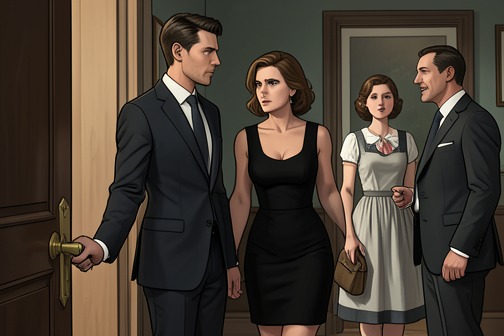
[Ted](entity:character-recall-character-ted-a4e78bcc093f)’s departure with [Anna Travis](entity:character-recall-character-anna-travis-c175492e0880) from a New Year’s Eve party in [Trenton](entity:location-recall-location-trenton-c9f93693c185), [New Jersey](entity:location-recall-location-new-jersey-25586b9a9d1c), turns an evening of jealousy and strained sociability into a decisive choice: he abandons [Rachel Derwin-Finkel](entity:character-recall-character-rachel-derwin-finke-c0df6d1c73b1) and leaves with Anna. The scene presents that choice as the triumphant high point of Ted’s life, but a twenty-years-later reflection from a hospital stretcher casts it as the start of a long decline.
## Background and Arrival
On the last day of 1998, Ted and Rachel arrive at Cynthia Krazewski’s house. Rachel has dressed as if preparing for battle: a very tight black dress, glittering high heels, heavily sprayed hair arranged in a French twist. Ted rings the bell; after a pause that seems deliberately prolonged, Cynthia opens the door. Rachel presses between Ted and their host and explains that Anna invited them. Her entrance gives the evening an immediate tension: the couple has come together, but Anna is already the person around whom Ted’s attention will turn.
Inside, Ted finds Anna at once, talking in a corner with [Ryan](entity:character-recall-character-ryan-9c6f1f1eaa2e) Creighton. Her loose pinafore dress, leggings, and newly dyed red hair strike him as a sharp contrast with Rachel’s polished appearance. He momentarily wonders whether Rachel is more attractive than Anna, or whether they are equally attractive, a comparison that shakes the assumptions he has held about Anna’s singularity. Then Anna lays a hand on Ryan’s bicep and laughs flirtatiously. Ted’s heart sinks again. Rachel notices the direction of his gaze and tightens her grip on his hand until it hurts.
## Jealousy and the Party
Once Anna realizes that Ted and Rachel are watching, she takes Ryan’s arm and approaches them. The ensuing greetings are superficial, punctuated by familiar exclamations about how long it has been. Anna and Rachel share a laugh at Ted’s awkward habits, while Ryan appears genuinely bored. The exchange makes Ted the subject of their shared amusement even as his attention remains fixed on Anna and Ryan; he privately feels so detached from the party that he would not care if everyone there, himself included, died that night. He gets very drunk.
A disturbance at the door later draws attention away from the party. Anna disappears, and Ted tries to follow, but Rachel stops him with a brutal grip on his wrist. The guests hear that [Marco Hernandez](entity:character-recall-character-marco-hernandez-0e61b73fb4f8) has briefly come by and left after seeing Anna there. Conversation turns to the restraining order: people wonder whether it is real or invented, and how such an order works in practice. The account does not resolve those questions. Instead, the episode adds an uneasy, unresolved complication to the party before Ted’s personal crisis comes back to the foreground.
At midnight, Ted kisses Rachel with his tongue and squeezes her bottom. The physical gesture does not signify a renewed commitment. He discovers that he can enjoy an experience while feeling entirely detached from caring about it, and even finds the detachment itself pleasurable. He wonders whether he has somehow become Buddhist or undergone a psychotic break. The moment makes his outward intimacy with Rachel and his inward indifference coexist, so that the public New Year’s kiss becomes a prelude to separation rather than reconciliation.
## The Private Conversation and Departure
Ted asks Anna to speak privately, and she takes him out onto the porch. It is cold, with light sleet falling, though his alcohol-warmed state keeps him from caring much about the weather. Anna lights a cigarette, exhales smoke, and scratches her thighs. Ted had not known that she smoked. The move outside separates their conversation from the party and its public performance, while leaving Ted still intoxicated and Rachel inside.
Anna tells him that she cannot believe what he has done: making out with his girlfriend and fondling her in front of Anna. Her accusation names the action Ted had just treated as pleasurable but emotionally inconsequential, and makes clear that Anna has been watching it as something that affects her. She cries as she says she is tired of pursuing bad men and wants someone dependable and good. Ted’s narration idealizes her in response, dwelling on her dimples, smooth skin, freckles, hair, and the perfume that enchants him; he describes her as the woman who has made him useless to anyone else. Anna kisses him. Ted embraces her and resolves to be good to her for the rest of his life, while privately reserving a minute to break up with Rachel first.
Anna waits on the porch while Ted goes back inside. He tells Rachel that he is leaving with Anna, beginning an explanation that he does not finish. Rachel’s look reaches, in the narration’s image, into the ragged tangle of his soul; words are no longer needed to convey what his choice means to her. The breakup brings shouting and crying, followed by beer thrown at Ted—only the liquid, not the glass. At last, he leaves the party with Anna, having arrived with Rachel Derwin-Finkel. The physical departure makes the choice final for the evening, but the scene supplies no account of Rachel’s subsequent actions or of what happens between Ted and Anna that night.
## Triumph and Retrospective Reversal
At the moment of leaving, Ted experiences the departure as the greatest and most triumphant moment of his life. The narration renders his happiness as if it were a sensation he could be granted for eternity in paradise. That exalted feeling is sharply at odds with the preceding drunkenness, emotional detachment, and painful breakup: Ted experiences his chosen future with Anna as a personal victory, even as the scene has shown the harm and instability bound up in the choice.
The narrative then jumps twenty years ahead. From the perspective of a hospital stretcher, Ted has to admit that, from that night onward, things went more or less wrong. This retrospective turn does not spell out every consequence of leaving Rachel, but it overturns the scene’s ecstatic ending. The departure remains a decisive romantic turning point—Anna reciprocates, and Ted chooses her over Rachel—while the older Ted’s perspective makes the triumph look less like a secure beginning than a moment whose promise the later course of his life fails to fulfill.
Event 14
Cass Arranges a Pool Boy Surprise for Taylor
[Kath](entity:character-recall-character-kath-608158731442)’s surprise for [Taylor](entity:character-recall-character-taylor-fff785c2825e) turns an obscure erotic-horror film from their adolescence into a live bachelorette-party spectacle. By finding the adult actor who played the unnamed pool boy and bringing him to [Los Angeles](entity:location-recall-location-los-angeles-11eff639bdf5), Kath tries to give Taylor a long-deferred encounter with her teenage fantasy; the evening’s staged seduction, however, leaves the meaning of that gift uncertain.
## The film Taylor remembered
Years earlier, Taylor had accidentally recorded an erotic horror film while trying to tape something else. The movie was so bad that the girls, only twelve at the time, would have been embarrassed to watch it if Taylor had not been so enthralled by its young male lead. The film’s title and the actor’s name have disappeared from Kath’s memory, but images of its scenes remain unusually vivid.
Kath recalls a poolside sex scene between the boy and an older woman who turns out to be some kind of vampire. Other fragments come back less securely: the pair lying together in a coffin, the possibility of a gravedigger or resurrection, and a knife that had to be hidden. Later, another scene returns in which the woman, a man, and the boy are all vampires, sharing a bed and drinking one another’s blood. The man may have been the woman’s husband, leader, or maker of the vampires; Kath cannot settle even the details of the mark he makes on the boy’s body.
One piece of the old fantasy has survived more firmly than the plot. Taylor had written a phrase about love in a notebook, beside a heart and a knife dripping blood. Kath kept the notebook after Taylor left it behind and read the phrase repeatedly, tracing the record of her friend’s daydream. That private keepsake helps explain why Kath treats the forgotten film not as disposable teenage embarrassment but as a route back to something Taylor once desired.
## Turning a memory into a surprise
As Taylor’s wedding approaches, Kath tracks down Jared Nicholas Thompson, now a middle-aged actor with a Twitter account, a YouTube channel, and a small, devoted group of fans. Some followers praise his newer work while openly recalling his early role as the pool boy. Kath makes her own approach in that vein. Thompson responds to her message after midnight, and two days later they arrange to speak over Skype.
Kath explains that she wants him to make an appearance, withholding some details but emphasizing the payment: five hundred dollars for two hours, with another five hundred as a bonus if everything goes smoothly. She suspects he might refuse if she plainly called it a bachelorette party. Instead, she presents the engagement as a chance to meet and chat, perhaps flirt, and possibly persuade him to take off his shirt or get into a pool. The arrangement depends on keeping the invitation respectable enough for an actor who wants to be taken seriously, while leaving room for the party’s less formal expectations.
Once Thompson agrees, Kath changes the plan for the celebration. She moves it from a cabin in the Sierras to a downtown Los Angeles hotel, replacing a women-only outing of hikes, campfires, and sleeping bags in the basement with a day at a spa: massages, aromatherapy, karaoke, dancing, and plenty of wine. She coordinates the event, travels to Los Angeles, and is collected at the airport by Taylor. Their embrace marks the first time they have seen each other in person in years. Taylor’s rose-gold engagement ring throws prismatic reflections across the car roof; at home in Echo Park, her wedding-task list is written on a refrigerator board in careful handwriting. The party is a reunion as well as a celebration, with time’s passage made visible in the changed occasion and its familiar friendship.
## The actor arrives
Thompson is meant to arrive at eight, but Los Angeles traffic delays him by more than an hour. His apologetic updates about the freeway exits he has passed are so specific and confusing that the guests have mostly finished eating by the time he finds parking. Some are ready to leave. Kath holds them there by hinting at the coming surprise, though her clues make it sound as if a stripper is expected.
He enters by an unexpected route, so [Lizzie](entity:character-recall-character-lizzie-e45debe8b469) sees him first. She recognizes his face without immediately placing it, and Taylor is still occupied with her phone when Lizzie tries to get her attention. Then another guest identifies him as the boy from the film. More than a third of the women at the table recognize Thompson, and their excited reaction confirms that Taylor’s old fixation has become part of a wider shared memory among the group.
Thompson turns sharply at the noise and seems ready to flee. Kath waves him over and welcomes him, while the women’s excitement swells around him. When Lizzie asks whether Kath arranged the appearance for them, Kath says it is for Taylor. She sees adulthood as having supplied the means to summon the man from an old VHS tape: social media, a thousand dollars, and the ability to bring him physically into the room. She introduces Taylor as his longtime admirer.
Taylor’s reaction is more restrained than Kath expects. She offers Thompson her hand; at Kath’s pointed look, he opens his arms instead, and the two embrace. Kath studies Taylor for a sign that the encounter has struck home, wondering whether her hands linger on his back or whether she presses her face to his neck to smell him. She cannot be sure. The gap between the fantasy Kath believes she has fulfilled and Taylor’s unreadable response becomes part of the event itself.
## The poolside performance and its turn
Later, Thompson heads for the pool with a fluid confidence that makes Kath wonder whether he already knows how the evening is supposed to unfold. He removes his shirt, addresses the women, and jokes that although he would like to think they came for his web series, their friend has reminded him of the real reason for the invitation. He asks who wants to swim with him, loosens his belt, and circles it over his head. The guests respond with admiration, but Kath is angry: the performance is exactly the caricature she had hoped to avoid by finding him, and it makes Taylor an unwilling audience for the spectacle.
Thompson dances out of his jeans and stands in his underwear. To Kath’s frustration, his deliberate foolishness does not make him unattractive. He remains lean, smooth-skinned, and beautiful, and she notices Taylor’s expression soften. When Thompson stretches, revealing matching dark tufts of hair beneath his arms, Taylor takes out the elastic holding her ponytail. He then dives awkwardly into the pool, splashing the women nearest the edge, while one guest reaches for a phone to take pictures.
In the water, the performance shifts from clowning to a precise replay of the remembered film. Thompson swims butterfly for three lengths, his strokes and turns theatrically exact; on the final stretch he goes underwater, his body moving through the still pool like a bright ribbon. He reaches Taylor, who sits at the edge with her legs folded beneath her, and waits for her to stand. With her eyes half-closed, she removes a sandal and offers him her foot. Thompson takes it and puts her big toe in his mouth, glancing briefly at Kath.
The women draw a collective breath. Taylor frees her foot, rests it against Thompson’s bare shoulder, and forcefully pushes him under. He slides beneath the surface with his hands against her calves. Kath knows the exchange is a paid act, but imagines him trapped underwater, unable to breathe until Taylor permits it. When he finally rises, breathless and jeweled with water, he looks up at her and she looks down at him. For a moment, Kath believes the surprise has worked: she has given Taylor what she wanted.
Taylor laughs and says that the performance is enough for the night. As she pulls her foot from the water, Kath comes up behind her, places both hands on her shoulders, and shoves her into the pool. The final gesture abruptly changes the balance of the scene: the person who arranged the fantasy interrupts its careful staging, sending its guest of honor into the water instead. The episode closes on that playful but forceful reversal, without resolving how much of Taylor’s old desire has truly returned or what the surprise means to her now.
Event 15
The Wish Spell Summons and Imprisons an Unnamed Man
[The Wish Spell Summons and Imprisons an Unnamed Man](entity:event-recall-event-82fa5e4e85b1) is the turning point in which a skeptical woman discovers that magic works and converts that discovery into a system of possession. A ritual performed out of curiosity brings an unnamed man into her cellar; the chalk circle keeps him there while she uses him to advance through a book of spells. Her growing power makes the captivity easier to maintain, even as her promises of eventual release and companionship become entangled with further exploitation.
## Discovery and Summoning
The episode begins with a small act of trespass. The woman finds a collection of photocopied pages hidden behind a library shelf. It has no cover, library card, or barcode; she rolls it up, puts it in her pocket, and leaves without the librarian noticing. At home, she follows the first instructions carefully, drawing a chalk circle on the cellar floor and combining crushed basil and blackberries with a lock of burnt hair and a drop of blood from her thumb. She tries the ritual less from conviction than from curiosity: finding a concealed spellbook, she reasons, is enough to make one spell worth attempting.
Nothing happens at first. She examines the remaining spells, finds their promises of wealth, beauty, power, and love overly extravagant, and decides to leave for a drink. Then a man appears in the circle, on the floor and visibly shaken. Her first response is a brief, almost absurd amusement at the literalness of a naked man as the object of a heart’s desire; fear quickly overtakes it, and she runs upstairs, falling against the door. The abrupt arrival overturns her assumptions about the world. Looking at her phone, she recognizes not only that she has performed magic but that its reality fills her with exhilaration rather than horror.
She prepares to go back down with her phone ready for an emergency call, a black leather jacket for reassurance, and knives in hand. The man remains in the circle. She reasons that he might be a demon and refuses his request to erase or wash away part of the chalk boundary so that he can leave. Instead, she proposes a test involving a blanket and his hand at the circle’s edge. The boundary is thus both the spell’s physical condition and the instrument by which she controls what happens next.
## The Circle Becomes a Prison
The woman later discovers that she has misunderstood the page. Desires of the Heart is the book’s title, not the name of the first spell; that spell, like the man it summoned, has no name. The next spell, Wealth, calls for heart’s blood rather than ordinary blood. Her own earlier attempt to supply blood has done nothing, so she concludes that the ingredient must come from the man. The discovery changes the ritual from an experiment into a practice that depends on keeping him captive and obtaining what the instructions require.
She supplies him with a blanket, pillow, clothing, a camping toilet, food, and water, but makes cooperation the condition of that care. She tests the wealth spell while he eats breakfast in the cellar. Instead of producing a miraculous heap of cash, it is followed by a call from an unknown number: she has inherited from a distant relative. The unexpected inheritance confirms that the book’s promises are taking effect, and her interest in continuing grows alongside her new confidence in the spells.
After a week, the man tries to take her knife and pull her into the circle. By then, she has already completed the spell for strength, and his attempt comes too late to reverse their positions. She changes how she treats him, stopping the earlier cutting and tending to him afterward, but this does not end his captivity or the use of the knife. The narration describes the changing marks on his back and the effort she makes to be gentle, while also making clear that the care takes place within a coercive arrangement she controls.
## Power, Company, and the Cost of the Spells
The captivity continues for weeks. The woman spends more time in the cellar, partly because the man listens and partly because both of them are lonely. She has no one else with whom to discuss the astonishing changes in her life; he, confined for long periods in a narrow, dark circle, has reason to want her company, though she admits that he may only be pretending. Her growing attachment therefore develops within a relationship whose conditions she has imposed and whose apparent intimacy cannot erase his lack of freedom.
One late, drunken night, she promises that when she reaches the end of the book and finishes its spells, she will release him and share everything with him. She knows she cannot expect him to trust or forgive her, but still imagines a future together. The last spell is called Love. That promise gives their confinement a supposed destination, yet it is made by the person who controls the circle and continues to decide what the man must endure.
As the spells proceed, a new ingredient appears: his tears. The woman considers stopping when she sees how greatly his condition has deteriorated. She already possesses wealth, success, luck, intelligence, strength, and beauty, and wonders what more power could offer. Even so, she continues, injuring her own palm as she struggles with the decision. The next spells require tears repeatedly; obtaining them becomes harder, and she pleads and cries alongside him. At times she holds him while he weeps and describes the life they might have together after the rituals are complete. Her language of shared future and her continued use of him occupy the same scene, making the promised release less a present choice than a justification deferred until the book is finished.
## Final Spell and Unresolved Ending
A year passes. The woman collects the man’s tears as the spells transform her circumstances until, in her account, she has everything she wants and begins inventing new desires simply to satisfy them. On reaching the last page, she brings down the remaining ingredients, collected from a farmers’ market and a dollar store. The man is now nearly unresponsive and has not spoken coherently for months. She remembers imagining that they would burn the book together once every spell was complete, with her love returned to her whole.
That expected conclusion fails when the last spell changes before her eyes and demands something different from both of them. She first laughs at the reversal, recognizing that having everything the heart desires would undo the usual moral of such a tale. Then she enters the circle and carries the exhausted man out. Their positions have reversed since the summoning: the force and fear that once belonged to him now belong to her, while he is nearly weightless in her arms. She removes his torn shirt, straddles him, kisses his dry, cracked lips, and places the knife at his chest. Convinced that she can find another love closer to her heart’s desire, she whispers that he should not be afraid. The story ends on that address, not on his release or on the promised shared future, leaving the final spell’s changed demand and her decision poised together.
Event 16
Laura's Parasitosis and the Parasite's Transfer
[Laura's Parasitosis and the Parasite's Transfer](entity:event-recall-event-e12651bc55ab) is a medical crisis that becomes a reversal of both diagnosis and fortune: what [Laura](entity:character-recall-character-laura-e8b3bd8aefc4) is told she only imagines is eventually revealed as a living parasite, but the proof arrives too late to keep [David](entity:character-recall-character-david-a0465b0b2f3d) safe. The episode binds intimate care to uncertainty, as David moves between doubting Laura, defending her, and discovering that belief alone cannot protect either of them.
## Symptoms and the Search for an Explanation
A year before the crisis comes to a head, Laura arrives home with marks she believes are bites. The possibility of bedbugs seems plausible in their [San Francisco](entity:location-recall-location-san-francisco-8a14902ce523) neighborhood, where rumors of an infestation are circulating, but hard to reconcile with their sleek glass-and-steel apartment. The symptoms rapidly become harder to dismiss as minor: after three days she has three bites, one on her cheek, and scratches so intensely that her eye swells shut. She is irritable and increasingly distressed. When David urges her to see a doctor, she says she cannot afford the insurance deductible; she has arranged an appointment at a free clinic on Longford Street instead.
David initially treats her search for an explanation as wasted effort, but soon finds himself repeating the same Google searches he had dismissed. At home, he finds Laura examining her arm with a magnifying glass and probing a small wound with a cotton swab. She insists she sees a tiny pale speck and celebrates when she lifts it from the wound. To David it looks no more than a minute, glinting grain. Laura identifies it as a torsalo parasite, and proposes that an insect laid eggs in a cut or burn, with larvae then burrowing beneath the skin. She argues that its presence inside her explains why David has no symptoms and why nothing has been found in their apartment. Her certainty brings relief: at last, she has an account of what is happening to her. David, who can see only a speck, does not share it.
## Medical Authority and the Matchbox Evidence
David arranges an appointment with his own doctor, Dr. Lansing, and asks to accompany Laura into the examination. Dr. Lansing looks over her many blisters and asks gentle questions; Laura answers as best she can, then presents the plastic bag containing what she believes she extracted. The doctor's manner changes. He gives the bag only a cursory look, sets it down, and asks how Laura feels apart from the itching. When she falls silent, David recounts the history for her, including her vulnerabilities, in the hope of making the doctor understand. He realizes too late that he has exposed her private struggles without permission in order to persuade a stranger that her pain is imaginary.
Dr. Lansing offers medication for the underlying cause he believes is implied by her condition, connecting her skin symptoms to the pressure she has been under and suggesting that improving her mood may reduce the dermatological problems. When David asks what can be done for the itching and presses for a dermatologist, the exhausted Laura agrees to try what the doctor recommends. Dr. Lansing then explains the reasoning behind his skepticism: Laura sees something in the bag that he cannot see, and she is certain where he is not. He calls the bag an example of [Prova nel portafiammiferi](entity:concept-recall-concept-prova-nel-portafiammi-0d54d1f6116f), a form of supposed proof once presented in empty matchboxes and now collected in plastic bags or containers, or captured in phone photographs. The contents, he explains, may be dead skin, dust, or lint: particles that take on the appearance of evidence when someone is intensely focused on the body and searching it for proof.
David objects that the explanation turns Laura's painstaking effort to gather evidence against her, as if trying to document her suffering were itself a sign that she was losing touch with reality. Dr. Lansing insists that he has not dismissed her distress: the parasites may be imaginary, but her suffering is real. He warns that [Delusional Parasitosis](entity:concept-recall-concept-4af6375b165e) can be associated with depression or be an early sign of psychosis, and can be difficult to treat, particularly when patients refuse help. Laura is willing to accept treatment, and he urges David not to obstruct it if he loves her.
## Treatment, Doubt, and a Second Opinion
Laura begins a course of care involving antidepressants and what her psychiatrist calls a very light antipsychotic. The treatment appears to calm the scratching and allows the wound on her face to heal. She sleeps for longer and longer stretches, takes long afternoon naps, gains weight, and loses some of her beautiful black hair. New raised marks continue to appear, and David still privately thinks they may be insect bites, but Laura resists scratching them; after a day or two, they subside. David tells himself that she is getting better, even as he sometimes looks at the slowed, foggy person on the sofa and resents what he fears the medication has taken from her. Their life settles into a stasis that he cannot accept as a certain cure. At night he wonders whether a physical infection has been misread as mental illness and whether his own account to Dr. Lansing helped silence Laura's pain.
David proposes seeking a second opinion from a dermatologist, not another psychiatrist. He brings Laura a carefully arranged stack of scientific articles he printed at work, pointing to evidence that physical skin diseases can be misdiagnosed as psychiatric problems, especially in women. Laura worries about the cost, but David says he does not care; when she suggests putting the expense on their spreadsheet, he rejects the calculation and reassures her that he loves her and will take care of her. They travel to the new dermatologist with the windows down, having agreed to leave the plastic bag at home and not volunteer information about the medication unless asked. They want Laura to be assessed afresh, beginning with the simple account that she is generally well but has an itch.
The dermatologist sees Laura alone. When she returns, she tells David that the doctor asked about her blisters and stress, then asked whether she was taking medication. Laura disclosed Depakote and believes that admission changed the doctor's view at once; the proposed treatment is a chemical peel for her scar. David is disappointed, but Laura comforts him: they knew it would be difficult, and this is only a first step. The couple have also connected online with a network of people who have hard-to-diagnose illnesses and supporters who provide a twelve-page list of sympathetic doctors. Their search remains open, sustained by their shared conviction that they will keep looking.
## Marriage and the Parasite's Emergence
In the drab parking lot outside the clinic, David asks Laura to marry him. They marry a week later at a courthouse, keeping the news from their parents and friends in San Francisco and New York. Laura buys a new dress because her old ones no longer fit and finds a vintage hat, which she decorates with a veil. Another discreet couple serve as witnesses, and strangers take a handful of photographs. Laura looks pale, and the prominent scar on her cheek shows through the veil; the pictures will not become the family keepsakes they imagine, but David thinks they have their lives ahead of them to learn how to love each other.
On their wedding night, David notices that the first bite has healed into a raised, glossy scar. A new blister has appeared about a centimeter above it. When he touches it, the skin feels warm, and he senses a pulse beneath his fingertip. The blister swells and trembles as if something inside is trying to escape. Laura is sunk in a drugged sleep and cannot be woken. As the skin ripples, a dark pinprick opens at its center; a clear, blood-filled bubble rises and bursts, and the parasite that has fed on Laura for months comes out.
David catches it and pulls it from her skin, stretching it like a living thread before dropping it onto the sheets. It is a knotted white tube of flesh, ten centimeters long, ringed with a thousand quivering legs. Its size and movement turn the earlier speck in the bag into something unmistakably alive. David believes that Laura was right and that he was right to believe her; he imagines bringing the creature to a doctor in a thick glass jar and finally putting medical science on her side. He also imagines that Laura may still carry newly hatched larvae, but that the mother parasite is dying and that she can be treated.
That hope lasts only moments. The parasite straightens, touches David's face with a leg, and hooks into the soft place between his eye and the bone. It disappears into him in a burst of pain. The sensation of legs inside his cheek and against his skull fades, leaving an itch and a small bump beneath his eye. Laura turns in her sleep and scratches herself, while David collapses beside her with the creature now inside his own body.
## Reversal and Significance
The late emergence resolves the conflict between Laura's perception and the doctors' interpretation in the most literal possible way: the evidence once dismissed as dust or lint has a living source. Yet proof does not produce immediate safety. David's support, their marriage, and the prospect of finally being believed all arrive at the threshold of a new infection. The transfer makes the couple's closeness physically consequential: the parasite passes from Laura to the person who tried to protect her, leaving the diagnosis vindicated but the danger unresolved.
Event 17
Katie Davis Calls Ellie Out for Biting
[Katie Davis Calls Ellie Out for Biting](entity:event-recall-event-905d6d55a270) marks the moment when a childhood behavior that Ellie loved became a source of acute shame. After Katie identified Ellie to her father as someone who bit people and was disliked by everyone, Ellie stopped biting for more than twenty years; the long silence did not, however, extinguish her fantasies about doing it.
## Background and Intervention
Ellie bit other children at preschool, her cousins, and her mother. At four, she went twice a week to a special doctor to work on the behavior. Their exercises made biting reciprocal and speakable: Ellie had two dolls bite each other, then speak about how it felt to bite and be bitten. The dolls’ exchanges included apology, hurt, and even pleasure, making the act something to examine rather than simply suppress.
The doctor also had Ellie make lists of alternatives, including raising her hand to ask for help, taking a deep breath, and counting to ten. At home, her parents put a chart on her bedroom door, and her mother added a gold star for each bite-free day. Ellie adored biting more than she adored the stars, and continued doing it enthusiastically and furiously despite the lessons and rewards.
## Katie’s Rebuke
The turning point came one day after preschool. The sweet Katie Davis pointed at Ellie and loudly whispered to her father that this was Ellie, that everyone disliked her, and that she bit people. The words were not presented as a formal confrontation: Katie addressed her father, while Ellie became the object of the remark. That indirect exposure made the judgment no less forceful. Ellie was so ashamed that she did not bite anyone for more than twenty years.
The event changes the course of the behavior more decisively than the specialist’s exercises or the gold-star chart had. The earlier measures taught Ellie alternative actions and rewarded restraint, but Katie’s comment attached biting to social rejection. The account links the lasting change to Ellie’s shame, rather than suggesting that she had lost her appetite for biting.
## A Behavior That Persists in Fantasy
As an adult, Ellie no longer bit people, but she still imagined doing so at work. In one recurring kind of scenario, she pictured crawling behind a colleague in the photocopy room while he collated reports, then sinking her teeth into his calf before he noticed her approach. In another, she imagined creeping up behind a colleague stacking wooden blocks at a craft table: an ordinary, quiet moment would break into screams and commotion, and Ellie would become a wild creature racing through the preschool corridors and leaving chaos behind.
These fantasies preserve the pleasure and disorder associated with biting while keeping them separate from action. The account explicitly distinguishes the adult’s understanding of consequences from a child’s: Ellie knows that biting at work could cost her the means to pay rent and keep her health insurance. The rebuke’s effect, then, is not a simple cure. Ellie has spent decades refraining, but the imagined bite remains vivid, bodily, and disruptive.
## Significance of the Episode
Katie’s remark becomes a compact dividing line in Ellie’s history: before it, repeated treatment and rewards fail to dislodge a cherished behavior; after it, shame holds the behavior at bay for over two decades. The contrast between Ellie’s outward restraint and her exuberant fantasies shows that stopping an act is not the same as ceasing to desire it. The episode gives the gap between social compliance and private appetite a concrete origin, rooted in a child being identified and judged in front of her father.
Event 18
Company Christmas Party Incident
The [Company Christmas Party Incident](entity:event-recall-event-9c34a992351a) brings Ellie’s effort to control her anger into collision with [Corey Allen](entity:character-recall-character-corey-allen-61f4db7ae071)’s repeated workplace harassment. After Corey corners her in a corridor and forces a kiss, Ellie bites him. A coworker’s testimony reveals that Corey has targeted other women, too, shifting the incident from an apparent confrontation between two employees into evidence of a wider pattern. Corey leaves the company, while Ellie’s later departure and repeated job changes give the episode a lasting consequence beyond the party itself.
## Setting and Immediate Stakes
Ellie has been drinking and is already struggling to regulate her anger. She thinks about biting Corey, then tells herself to go home because she is drunk. Instead, she sets down her empty glass and walks to the bathroom to wash her face. When she comes back out, Corey is waiting alone in the corridor. The empty passage leaves her alone with him, away from the party’s other employees.
Ellie recognizes the moment as an opportunity to leave before she does something she might regret. Corey’s cheerful greeting does not make the encounter safer: he has noticed that she may be leaving and uses the exchange to keep her there. He points toward something on the ceiling, prompting Ellie to look up. While her attention is diverted, he grabs her, forces a kiss on her, and restrains her when she tries to push him away. His joking explanation afterward, that he thought he had seen mistletoe, recasts the assault as a harmless mistake rather than acknowledging Ellie’s refusal.
## Ellie’s Response
Ellie protests directly and recognizes the kiss as a violation. Corey laughs off her objection, but his casualness does not persuade her that the encounter was welcome. The scene instead makes the imbalance plain: Ellie is attempting to leave and resist, while Corey uses the brief distraction to overpower her. The fact that he is described as an elf does not lessen the force of the encounter; the narration emphasizes that he is physically strong despite that appearance.
Ellie then bites Corey. The act is both a response to the assault and the culmination of the impulse she had been trying to restrain. She has been out of practice for twenty years, but she acts with control and determination once she decides to defend herself. Corey collapses and cries out. Ellie’s response is forceful, and the episode does not present her action as a calm or consequence-free choice: she immediately imagines that she may go to prison. Her fear underscores how easily an observer might initially interpret the incident as Ellie attacking a coworker, without knowing what preceded it.
## Witness and Disclosure
Before Ellie can explain herself, [Michelle](entity:character-recall-character-michelle-246b9eb4f39d) from Accounting approaches. She says she saw what happened and embraces Ellie, asking whether she is all right. Michelle names Corey’s conduct as harassment rather than treating the kiss as a misunderstanding or Ellie’s bite as the only relevant action. Ellie initially seems uncertain how to respond, then accepts Michelle’s description of what occurred.
Michelle also discloses that Corey has harassed her. He followed her on the stairs and touched her inappropriately on more than one occasion; she had been coming to warn Ellie when she witnessed the encounter. This testimony changes the meaning of the scene. Corey’s mistletoe excuse is not an isolated lapse that Ellie has misread: Michelle identifies a repeated pattern and had already considered Ellie at risk. Ellie’s experience is confirmed by another employee who has faced similar behavior, and the incident becomes a point at which the pattern can be seen and reported rather than privately endured.
## Workplace Consequences and Recurrence
The company’s Human Resources response is swift and severe. It emerges that Corey has behaved inappropriately toward several women, not only Ellie and Michelle. Corey leaves the company, and Ellie’s personnel file contains no mention of the incident. Instead of suffering the workplace penalty she feared, Ellie finds that she has more friends at the office than before. The support and corroboration around her reverse the initial prospect that she alone will be judged for the confrontation.
That resolution does not end Ellie’s unease about work. Six months later, she leaves in search of a fresh start, and afterward changes jobs regularly, about once a year. She comes to believe that every office has a man like Corey, one whom employees quietly discuss and whose behavior becomes apparent when he finds an opportunity. The party therefore produces an immediate institutional consequence, but not a lasting sense of safety: Corey is gone from this workplace, while Ellie carries forward an expectation that the same pattern may recur elsewhere.
## Narrative Significance
The incident turns on the difference between what can be seen at first glance and what becomes known through testimony. Ellie’s bite is conspicuous; Corey’s conduct is initially something he tries to disguise as a joke. Michelle’s account supplies the missing context, identifying a history of harassment and recasting Ellie’s action within the encounter that provoked it. The company’s response follows the wider evidence of Corey’s behavior, not merely the dramatic final act in the corridor.
The ending is deliberately mixed. Ellie is believed, Corey leaves, and her colleagues become more supportive; yet she does not remain at the office indefinitely. Her later pattern of changing jobs suggests that removing one harasser cannot remove the broader workplace risk she has learned to anticipate. The party offers a moment of recognition and accountability, but not a guarantee that the next office will be different.